Manfred Gnädinger


The Hermit Artist of Galicia's Wild Coast

I was born near Camelle, on the Costa da Morte, and grew up hearing the legend of the mad German who had built a strange museum by the sea. As a child, that story lived somewhere between curiosity and myth—a man from another world who had come to the edge of ours and decided not to leave. I always wanted to go. When I finally did, the reality of the place was more extraordinary than anything I had imagined.

What kept ringing in my head was a single question: how does someone who spends a lifetime searching for freedom confine himself so completely to one small strip of coast? And yet, standing there in front of his work, I began to understand. His confinement was his freedom. He had built an entire world, entirely on his own terms, in a place where the sea constantly threatened to undo everything he made.

What struck me most was the coexistence of two parallel worlds. The world of the local fishing community and the world of Manfred occupied the same physical space—the same coast, the same village—but they were separated by a million light years. And yet they coexisted, with a quiet respect on both sides.

His museum had its own rules. If you wanted to photograph, you paid one euro per camera. And at the end of your visit, he handed you a notepad and asked you to draw something. That small ritual said everything about how he understood the exchange between the artist and the visitor.

The Prestige oil tanker sank in November 2002. The black oil flooded his beach, his sculptures, his world. Manfred died the next day. He is remembered as the only human victim of the Prestige disaster—not killed by the oil in any physical sense, but by the total destruction of the life he had built and the landscape he had devoted himself to. I can only imagine the weight of watching all of that disappear overnight.

These photographs are a document of Manfred's world before that end. They are also something more personal: the record of a visit that showed me, in a way I never forgot, how differently two people can inhabit the same place.


Museo de MAN

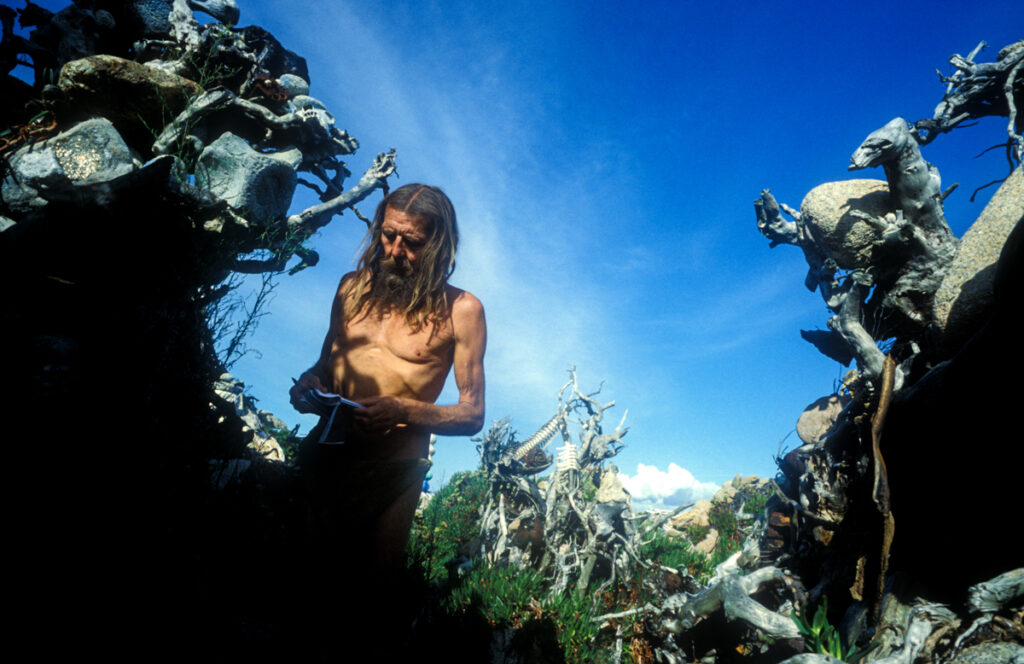
Manfred Gnädinger standing shirtless among organic stone sculptures in Camelle’s coastal landscape.

Manfred Gnädinger, known as “O Alemán de Camelle,” surrounded by his stone sculptures on the wild Costa da Morte.
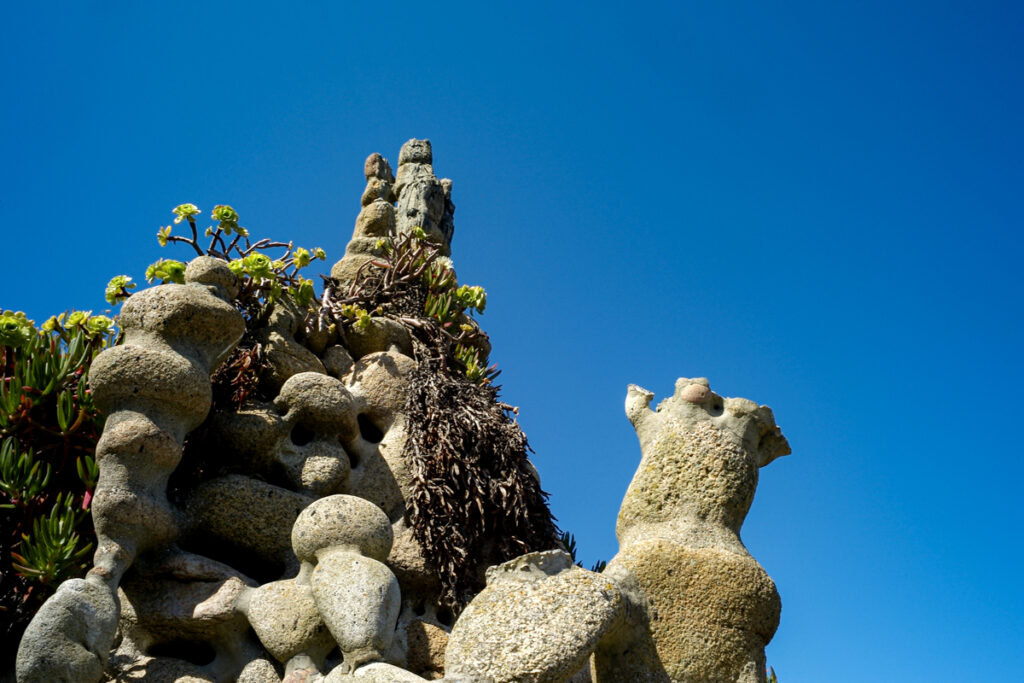
 

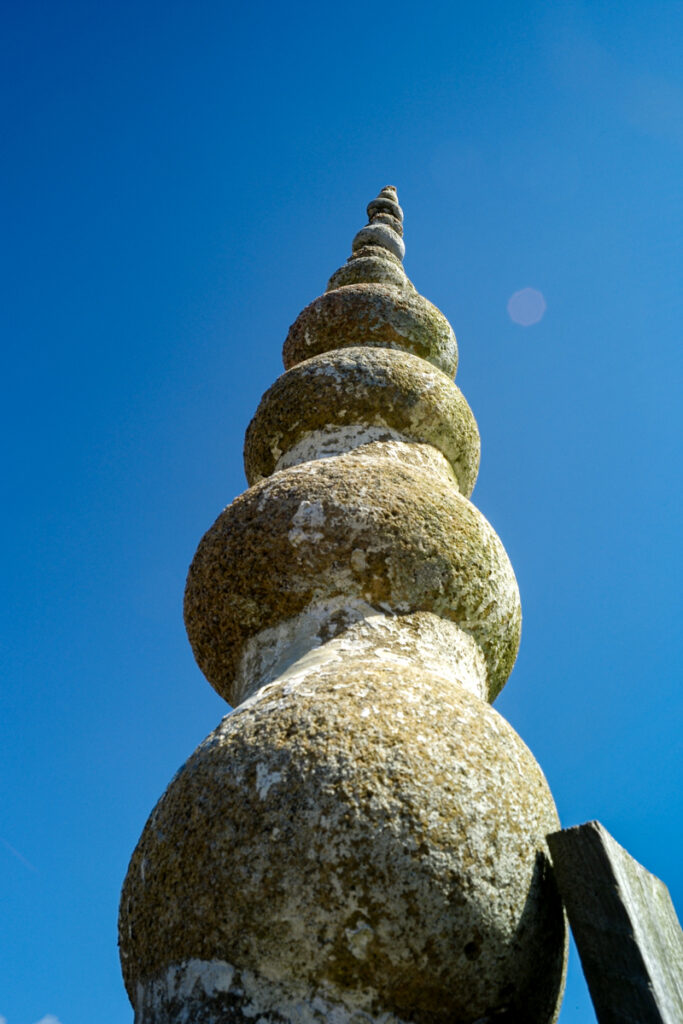
Close-up of a sunlit stone totem with vegetation atop in the Museo do Alemán, Camelle.

A towering stone totem by Manfred Gnädinger, crowned with resilient coastal vegetation and set against a clear blue sky.
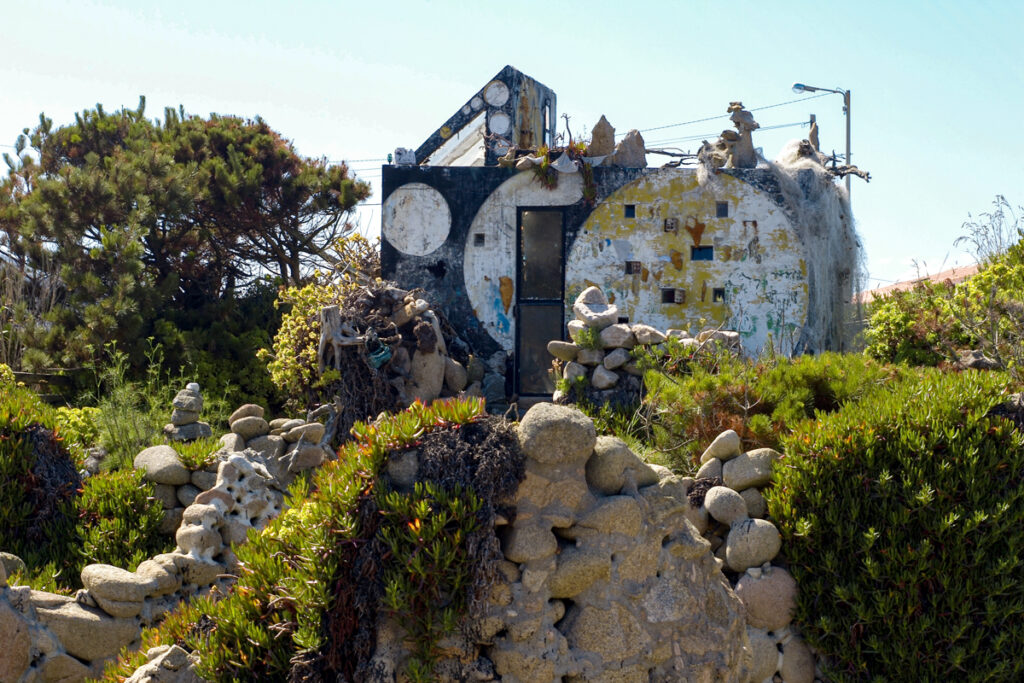
 

Ruins of Manfred Gnädinger’s house with stone sculptures and overgrown plants at Museo do Alemán in Camelle.

Remains of Manfred Gnädinger’s home and art space, surrounded by his enduring stone sculptures and wild vegetation.
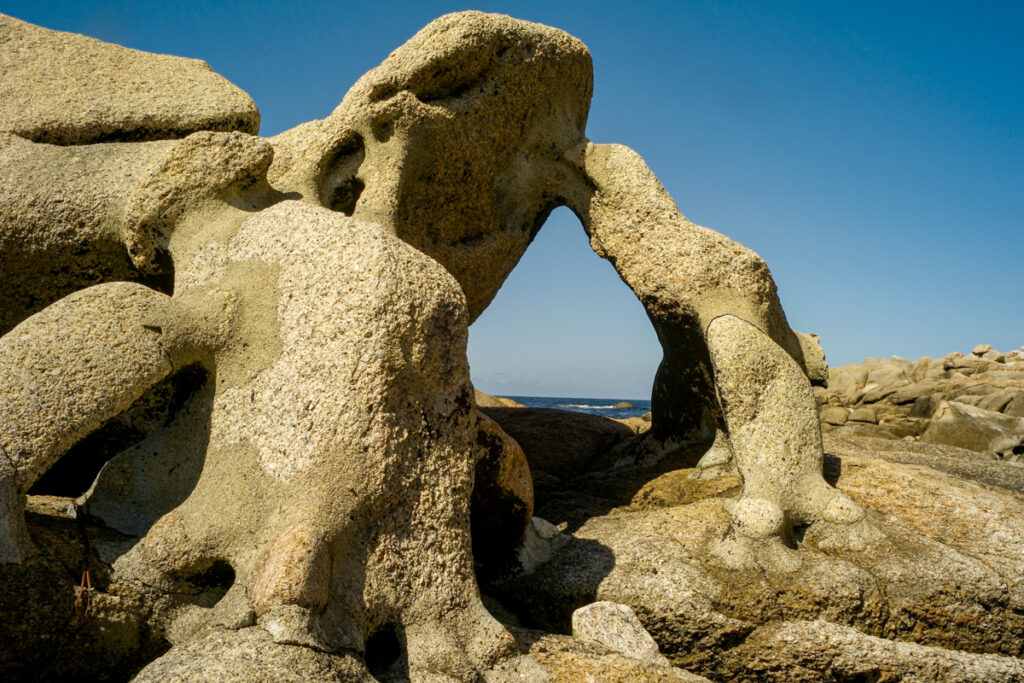
 

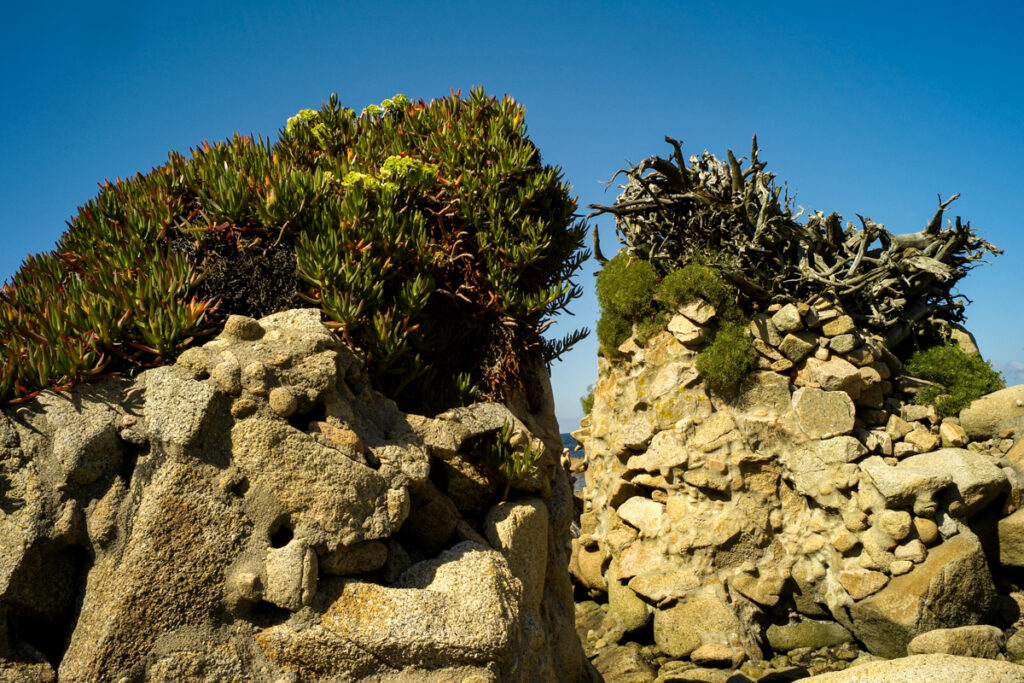
The wild landscape and rugged coast of Camelle became the main source of inspiration for Man. Using stones rounded by erosion, wood washed up by the sea, animal bones, crustacean shells, conch shells, sponges, plastics and other marine debris to create his sculptures. His creations were part of an outdoor sculpture garden that completely merged with the coastal environment. Some of his creations interacted with the tides, changing appearance as the water rose or fell, creating reflections and shine that enriched the visual experience. He built Micro environments with palisades and spaces covered with vegetation.
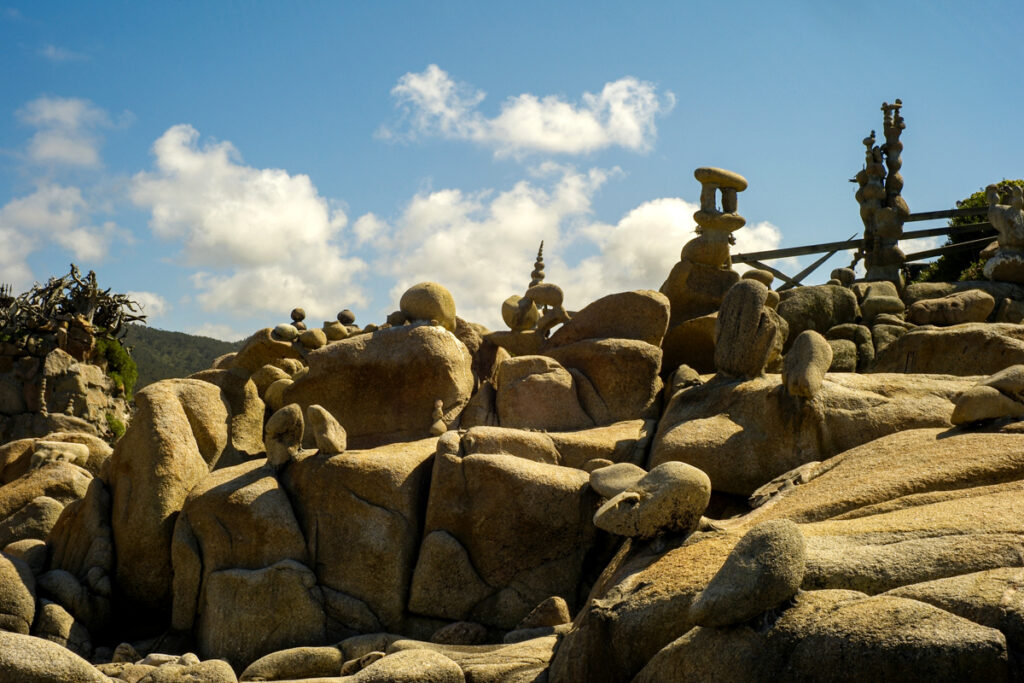
The wild landscape and rugged coast of Camelle became the main source of inspiration for Man.
Using stones rounded by erosion, wood washed up by the sea, animal bones, crustacean shells, conch shells, sponges, plastics and other marine debris to create his sculptures. His creations were part of an outdoor sculpture garden that completely merged with the coastal environment. Some of his creations interacted with the tides, changing appearance as the water rose or fell, creating reflections and shine that enriched the visual experience. He built Micro environments with palisades and spaces covered with vegetation.


Sculpted stone landscape and spires created by Manfred Gnädinger along Camelle’s rocky shoreline.

Manfred Gnädinger’s hand-crafted stone spires and formations, rising from the rocky coastal terrain of Camelle.
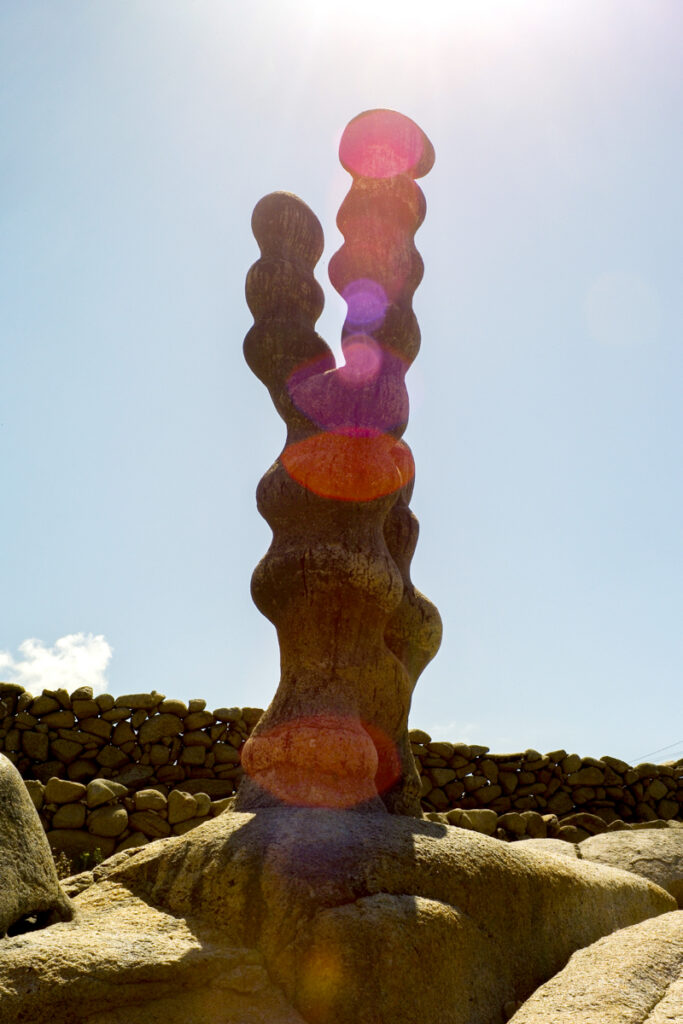
 

The wild landscape and rugged coast of Camelle became the main source of inspiration for Man. Using stones rounded by erosion, wood washed up by the sea, animal bones, crustacean shells, conch shells, sponges, plastics and other marine debris to create his sculptures. His creations were part of an outdoor sculpture garden that completely merged with the coastal environment. Some of his creations interacted with the tides, changing appearance as the water rose or fell, creating reflections and shine that enriched the visual experience. He built Micro environments with palisades and spaces covered with vegetation.
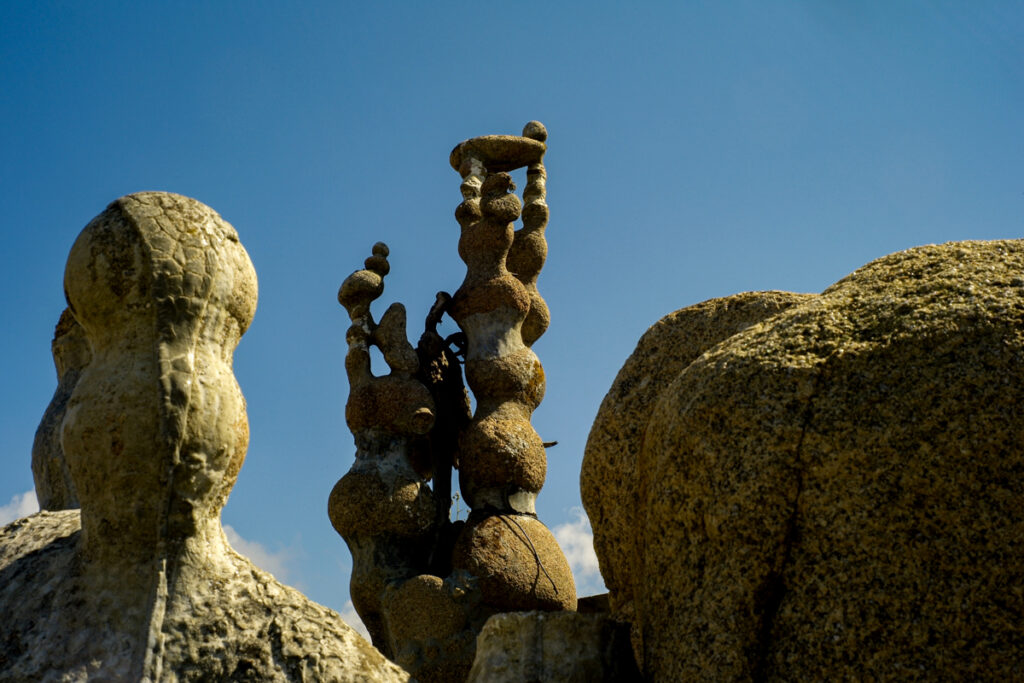
The wild landscape and rugged coast of Camelle became the main source of inspiration for Man.
Using stones rounded by erosion, wood washed up by the sea, animal bones, crustacean shells, conch shells, sponges, plastics and other marine debris to create his sculptures. His creations were part of an outdoor sculpture garden that completely merged with the coastal environment. Some of his creations interacted with the tides, changing appearance as the water rose or fell, creating reflections and shine that enriched the visual experience. He built Micro environments with palisades and spaces covered with vegetation.


Abstract, organic stone sculptures created by Manfred Gnädinger under a clear blue sky in Camelle.

Sinuous stone forms rise against the sky—part of Manfred Gnädinger’s unique open-air art in Camelle.
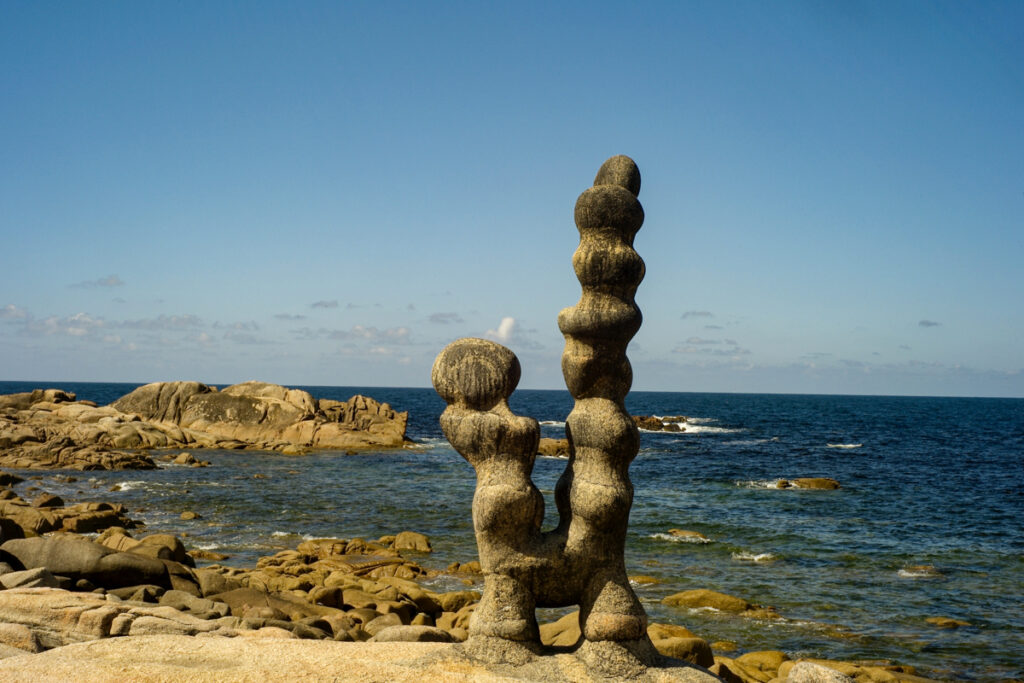
 

The wild landscape and rugged coast of Camelle became the main source of inspiration for Man. Using stones rounded by erosion, wood washed up by the sea, animal bones, crustacean shells, conch shells, sponges, plastics and other marine debris to create his sculptures. His creations were part of an outdoor sculpture garden that completely merged with the coastal environment. Some of his creations interacted with the tides, changing appearance as the water rose or fell, creating reflections and shine that enriched the visual experience. He built Micro environments with palisades and spaces covered with vegetation.


The wild landscape and rugged coast of Camelle became the main source of inspiration for Man. Using stones rounded by erosion, wood washed up by the sea, animal bones, crustacean shells, conch shells, sponges, plastics and other marine debris to create his sculptures. His creations were part of an outdoor sculpture garden that completely merged with the coastal environment. Some of his creations interacted with the tides, changing appearance as the water rose or fell, creating reflections and shine that enriched the visual experience. He built Micro environments with palisades and spaces covered with vegetation.


The wild landscape and rugged coast of Camelle became the main source of inspiration for Man. Using stones rounded by erosion, wood washed up by the sea, animal bones, crustacean shells, conch shells, sponges, plastics and other marine debris to create his sculptures. His creations were part of an outdoor sculpture garden that completely merged with the coastal environment. Some of his creations interacted with the tides, changing appearance as the water rose or fell, creating reflections and shine that enriched the visual experience. He built Micro environments with palisades and spaces covered with vegetation.