Location
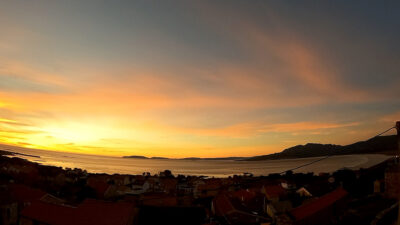
From the old stone village of Sofan, the camera’s gaze sweeps the rooftops, the wild arc of Carnota Bay, Caldebarcos, the sacred bulk of Monte Pindo, and the distant “Lands End”—Cape Finisterre. Each frame, 80% sky, becomes a blank canvas for wind, storms, stars, and sunsets; an ethereal opera curtain rising and falling over everyday life.
Costa da Morte: Where time and memory shape heritage.

On Galicia’s Costa da Morte, the sky is more than a backdrop: it is a persistent force that shapes the rhythm of life, identity and memory. For centuries, time has been both creative and destructive, instilling fear and respect in those who call this rugged coast home.
The region’s climate, where sudden Atlantic storms, misty mornings and blinding sunshine occur in a matter of hours, has forged a heritage steeped in resilience. From their earliest settlements, Celtic peoples watched the changing skies, interpreting shifting winds and ominous clouds as signs from their deities. Rituals, celebrations and daily routines reflected the seasons: sowing with the spring rains and reaping the harvest after the last of the autumn storms.
From the union of turbulent weather and dangerous seas, legendary tales emerged. The coast became known for its "ship graveyard," a place where hundreds of ships found their fate on steep rocks or in swirls of fog and storm. These disasters were not mere accidents, but became landmarks in the community's narrative, each shipwreck marked by songs, prayers, and remembrances. The memory of sailors lost at sea was mixed with myth: spirits wandering the shore, ghostly lights guiding fishermen home, and gods appeased by offerings for calmer seas. The architecture also reveals the relentless influence of the climate. Massive stone walls and compact dwellings stand as defenses against Atlantic gales. Even church towers bear witness, built as watchtowers and refuges during violent storms. Local festivals and artistic traditions commemorate heroic rescues, mourn tragic losses, and celebrate the rebirth granted by sunny days. As generations pass, great climatic events—rains that never cease, winds that uproot trees, or winters blanketed by unexpected heat—remain etched in the collective memory. They are landmarks that define entire eras and anchor the region’s sense of identity. Today, the culture of the Costa da Morte is still shaped by this endless interplay of time and legend. The dramatic beauty of its skies, the enduring stories of shipwrecks, and the steadfastness of its people bear witness to a living heritage, where every change of wind, every storm, and every clear dawn inspires both caution and awe. Climate is not simply a physical reality here; it is an intangible heritage, always in motion, always a source of history and life.